 Pralarg Magazine Pralarg Magazine

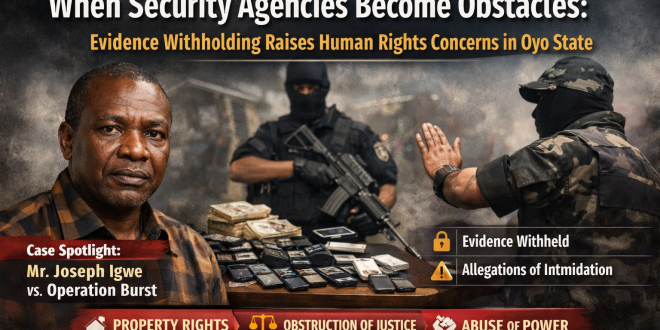
Case Spotlight: Mr. Joseph Igwe vs. Operation Burst
By Step Rights Magazine Editorial Desk Lead
A human rights petition in Nigeria’s Oyo State has brought renewed scrutiny to the conduct of security operatives, after officers of Operation Burst were accused of withholding recovered evidence and obstructing a police investigation in a burglary case involving a local shop owner.

Background to the Incident
According to details contained in the petition, the incident occurred on February 8, 2026, when Mr. Joseph Igwe received a distress call that his shop in Kajola Local Government Area had been burgled.
Mr. Igwe reportedly arrived at the scene shortly after the break-in, only to find that the suspects had fled.
Operatives of Operation Burst later apprehended the suspects along Iseyin Road, recovering several items believed to have been stolen, including:
- 72 mobile phones
- 71 power banks
- 48 MP devices
- 2 solar lights
- A vehicle allegedly used in the operation
Initial accounts suggested a coordinated and effective response by security personnel.
Allegations Against Security Operatives
However, the situation took a different turn following the recovery of the items.
The team leader, identified as Bright Onyema, allegedly assured the complainant that all recovered items would be transferred to the police for proper investigation. Instead, the petition alleges that the officers:
- Took custody of all recovered items
- Transported them to their office in Shaki
- Failed to hand over complete evidence to the police
- Issued threats when contacted for updates
The failure to present full evidence reportedly led to a stalled investigation, as police authorities in Eleyele declined to proceed with incomplete documentation.
Legal and Human Rights Concerns
Legal analysts say the case raises significant concerns under both Nigerian law and international human rights standards.
Right to Property
Under Section 44 of Nigeria’s Constitution, citizens are entitled to protection from unlawful deprivation of property. The withholding of recovered goods without lawful justification may constitute a violation of this right.
Obstruction of Justice
Failure to transfer complete evidence — including the recovered vehicle — could compromise investigations and weaken potential prosecution, raising concerns about obstruction of justice.
Abuse of Authority
Allegations that officers issued threats to the complainant have been described by rights advocates as an abuse of power and an attempt to silence a victim seeking redress.
Due Process Violations
Criminal procedure requires transparent documentation and proper transfer of evidence to designated investigative authorities. Deviations from this process risk undermining the integrity of the case.
Intervention and Outcome
Following intervention by Pralarg International, a human rights advocacy organisation, authorities initiated a review of the case.
The intervention led to:
- The release of all recovered items to Mr. Igwe
- Renewed attention to the conduct of the officers involved
However, the petition further alleges that one of the implicated officers later attempted to persuade the complainant to alter his statement — an act that could amount to witness tampering and interference with an ongoing investigation.
Public Advisory: Know Your Rights
Rights advocates say the case highlights the importance of public awareness when dealing with law enforcement agencies.
If Your Property Is Recovered
- Ensure all items are properly documented
- Confirm that evidence is transferred to the police
- Keep records, including photos and communications
If You Face Intimidation
- Do not alter statements under pressure
- Report threats to appropriate authorities
- Seek support from credible human rights organisations
Wider Implications
Observers say the case reflects broader systemic challenges within parts of Nigeria’s law enforcement framework, where gaps in accountability can undermine public confidence.
While security agencies play a critical role in combating crime, experts stress that their authority must be exercised within the limits of the law.
Conclusion
The Oyo State case underscores a fundamental principle of justice: effectiveness in policing must be matched by transparency, accountability, and respect for human rights.
For victims like Mr Joseph Igwe, the pursuit of justice does not end with the recovery of stolen property — it depends equally on the integrity of the process that follows.